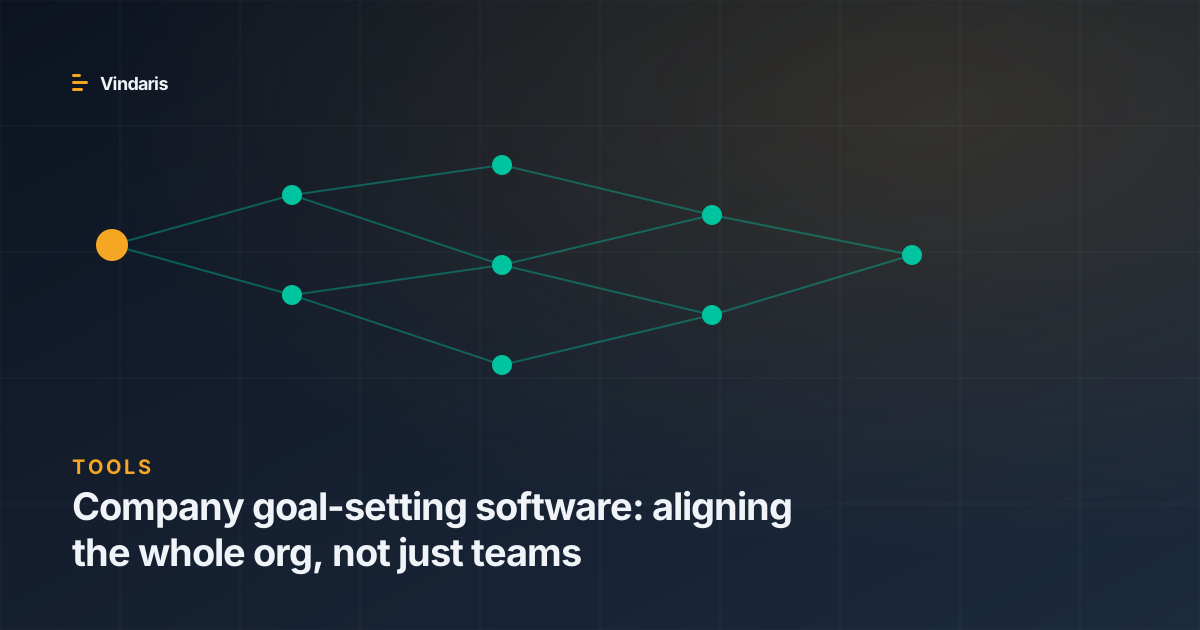
Company goal-setting software is a different problem from team goal-setting software, even though the search terms look alike. The job is no longer helping one team set objectives. It is connecting a top-level strategy to the goals of every team and person beneath it, so that a priority set by leadership actually shows up in the work happening three levels down. That is an alignment problem, and most tools solve it on paper with a cascade that looks tidy in a diagram and falls apart in practice.
The reason company-wide goals are hard is that they have to survive translation. The strategy is set at the top in broad terms, and each layer below has to convert it into something concrete without losing the thread. When the translation breaks, you get teams that are busy, on track by their own measure, and pointed in directions that no longer add up to the company's strategy.
What changes when goals go org-wide
At team scale, a goal tool's job is visibility. At company scale, the job is alignment, and that adds two requirements. Goals have to connect across teams, because the initiatives that matter most usually span several of them. And the top-level strategy has to stay legible all the way down, so a person on a single team can see how their goal ladders up to where the company is going.
This is where the simple tracker runs out of room. It can hold a team's quarterly objectives well. It cannot hold the relationships between a company objective, the team goals beneath it, and the work delivering each one, because that is a graph, not a list. When alignment is treated as a system property rather than a quarterly slide, the tooling requirement changes.
Why the cascade breaks
The classic model for company goals is the cascade: the CEO sets objectives, each layer copies and narrows them, and authority flows down the org chart. It looks rigorous. It breaks for a predictable reason, which is that the org chart is not how work actually flows. Real work crosses team boundaries, and a cascade that mirrors reporting lines cannot represent a goal that two departments share. The result is the gap between the org chart and the goal graph, and it is where cross-functional priorities go to die.
A goal graph beats a cascade precisely because it lets a goal connect to whatever work delivers it, regardless of which box owns which person. Company goal-setting software that models a graph can show a shared objective honestly. One that only models a cascade has to pretend shared goals do not exist.
The model that holds alignment together
The model that works connects three things and keeps them connected: the company strategy, the goals at each level, and the work that moves them. Once those are linked, status stops being a thing people type and becomes a thing the system derives from the work. That is the difference between a goal tracker and a strategy execution system, and at company scale it is the difference between a green dashboard you hope is true and one you can stand behind. Vindaris is built for the second case, and the connect team goals to company strategy guide covers the mechanics.
If you are choosing tooling, the best goal-setting software roundup separates the team-scale trackers from the org-scale execution systems, and the goal management page covers the category boundary. For the framework question underneath, picking the right goal framework settles whether OKRs, KPIs, or something else carries your company goals best.
FAQ
What is the best software for company-wide goal setting? The best fit connects the top-level strategy to team and individual goals and keeps that connection live, rather than copying objectives down an org chart once a quarter. Team-scale trackers handle a single team well but struggle to represent goals that span departments. For genuine company-wide alignment, a strategy execution tool like Vindaris models the relationships as a graph and derives status from the work, so a shared objective stays honest.
Why do goal cascades fail at company scale? Because the cascade mirrors the org chart, and work does not. Real initiatives cross team boundaries, so a goal that two departments share has no clean place to live in a structure built on reporting lines. The cascade looks rigorous in a diagram and quietly drops the cross-functional goals that matter most. A goal-graph model avoids this by letting goals connect to whatever delivers them.
How do you keep team goals aligned with company strategy? Connect each team goal to the company objective above it and to the work below it, and keep those links live rather than setting them once at planning. When the connection is maintained, drift becomes visible early instead of surfacing at the quarter's end. The failure mode to avoid is goals that are set in alignment at planning and then never reconciled with the strategy as both change.