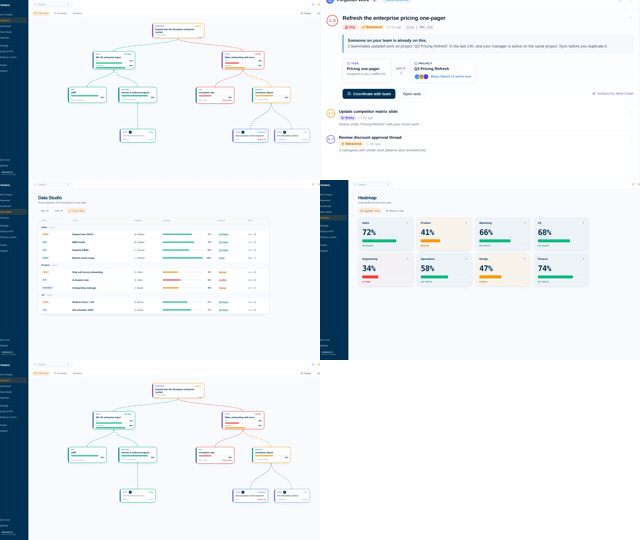
Viva Goals is gone. The architecture was always the problem.
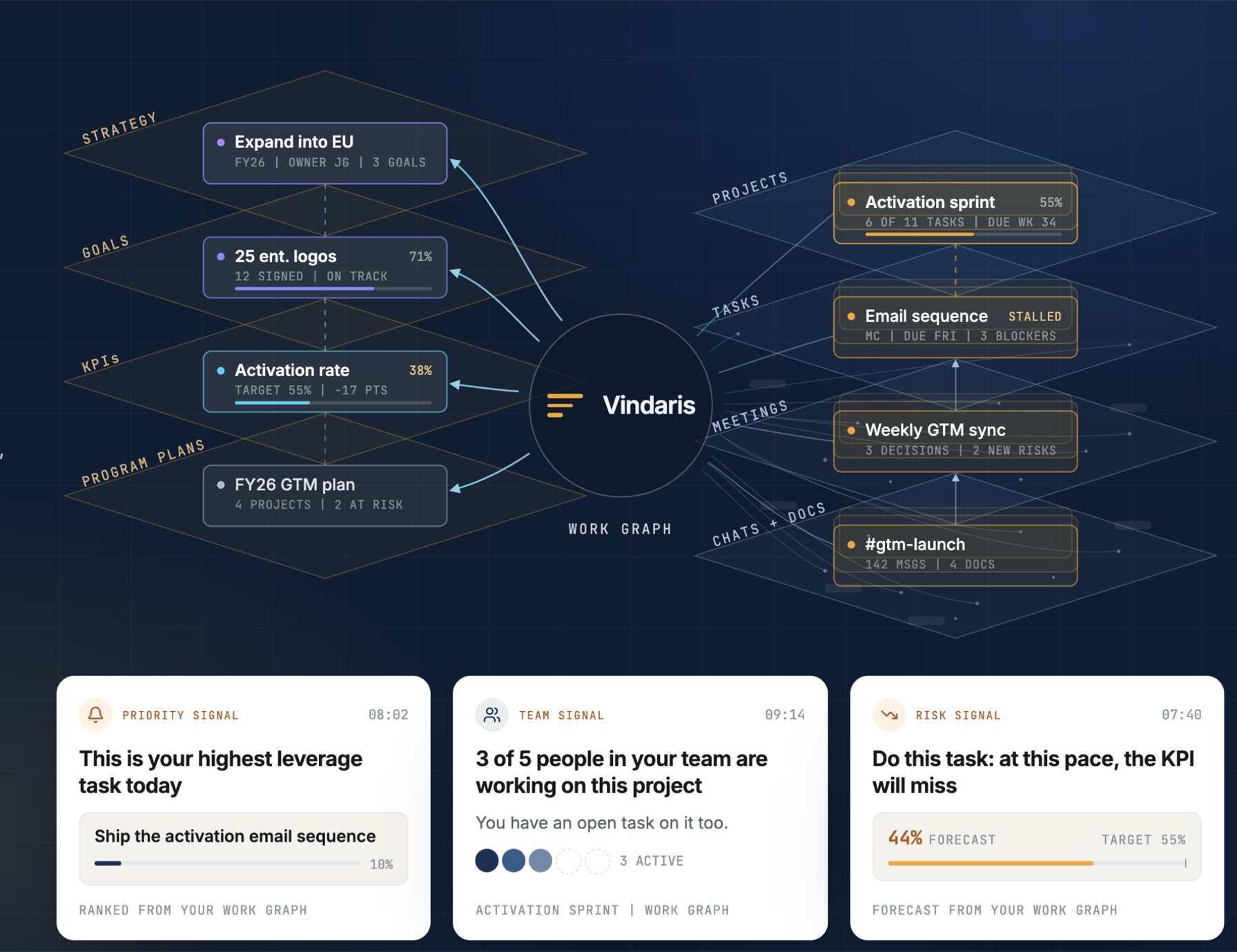
Most replacements sell the same thing in a new wrapper: a goal layer floating above the work. Vindaris reads the work instead of asking people to retype it.





Last reviewed August 2026
Microsoft retired Viva Goals on December 31, 2025. Existing customers had to export their objectives and move to another system. Microsoft pointed customers toward partner solutions rather than a direct in-house replacement, which is why most teams treated it as a category re-evaluation rather than a like-for-like swap.
It did not fail on features. It failed on where the status came from.
Every post-mortem cites low adoption and weak integration, but those are symptoms. Viva Goals was a goal-syntax tracker sitting on top of Microsoft 365, reporting on strategy with no structural connection to the work happening in Planner, Teams or Jira.
Every post-mortem on Viva Goals cites low adoption and poor integration with daily work. Those are symptoms. The root cause is architectural: Viva Goals was a goal-syntax tracker sitting on top of Microsoft 365, reporting on strategy with no structural connection to the work happening in Planner, Teams, Azure DevOps, or wherever your people actually spent their day.
The result was predictable. Goal check-ins became a separate ritual. Teams updated OKRs as a reporting exercise, disconnected from the work that was or was not moving them. Leadership read green dashboards while initiatives quietly stalled. The system reported what people told it, and it had no way to tell them what was happening.
Goals without traceable work are theater. While goal-tracking and work-tracking live in separate systems, joined by integrations, manual updates and weekly check-ins, leadership never gets a reliable view of whether effort matches outcome. The gap between them is where strategy quietly dies.
What teams consistently praised
- Sat inside Microsoft 365, so licensing and identity were handled.
- Teams integration put check-ins where people already worked.
- Clean OKR modelling, easy to explain to a first-time team.
- Reasonable connectors for metric values from Microsoft sources.
Where teams hit the limit
- Retired on 31 December 2025, so migration is no longer optional.
- Check-ins became a ritual disconnected from the work.
- Dashboards showed green while initiatives quietly stalled.
- The system could not observe anything on its own.
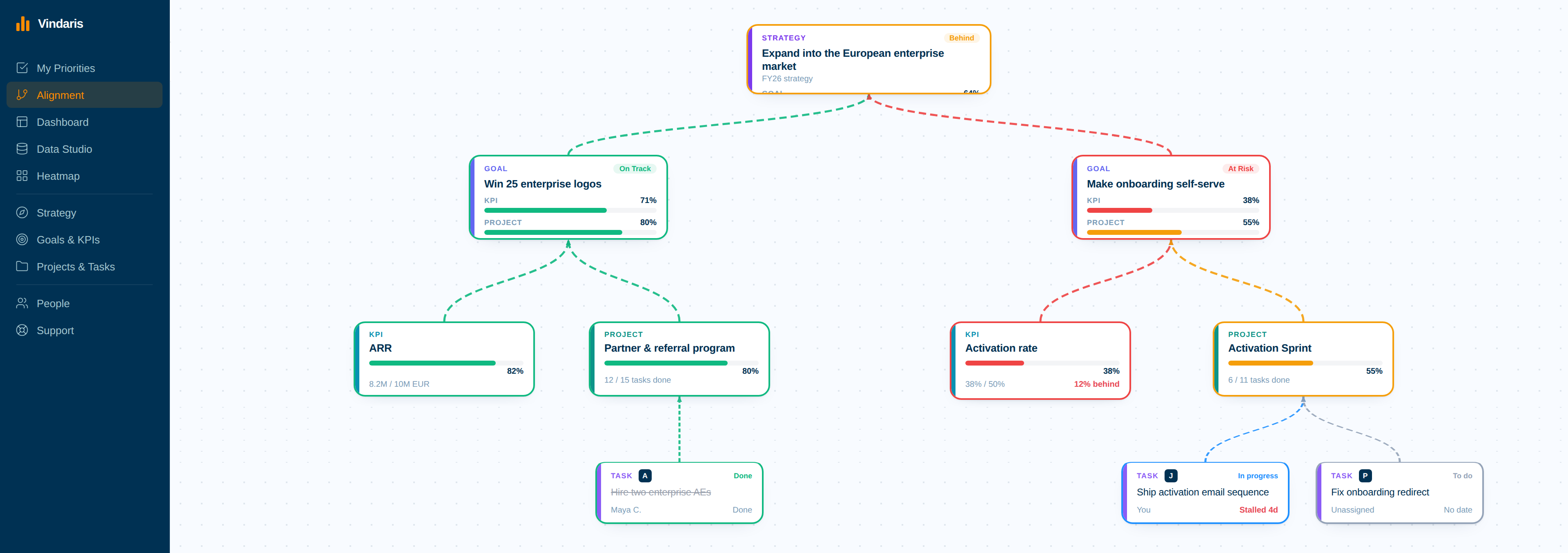
Most replacements repeat the same mistake.
- Goals live in one system. Work lives in another.
- Teams update goals as a reporting exercise.
- Integrations move data, not traceable links between effort and outcome.
- Dashboards show what teams reported, which is not what happened.
- Retired 31 December 2025, so the decision is already forced.
- Progress derived from Planner, Teams and the rest of the stack, not typed into a form.
- No check-in ritual to rebuild in the replacement tool.
- Risk flagged from stalled work before a dashboard would show it.
- Any framework, so the migration is not locked to OKRs.
- A product whose roadmap is not a strategic side bet.
Viva Goals sat on Microsoft 365. It never read it.
Viva Goals modelled objectives and key results well enough, and it lived inside the Microsoft tenant, which solved identity and licensing on day one. What it never had was a representation of the work in Planner, Teams, Azure DevOps or anywhere else, and that is the reason the check-ins felt like overhead.
| Object | Viva Goals | Vindaris |
|---|---|---|
| Central object | The objective and its check-in | The task and its edges up to the goal |
| Relationship to Microsoft 365 | Hosted alongside it, reading almost nothing | Bidirectional sync with Planner, Teams, Google, Jira |
| Progress source | The value the owner enters at check-in | Task state in the connected tools |
| Risk detection | None | Pace, focus and capacity against plan |
| Current status | Retired December 31, 2025 | Actively developed, EU hosted |
The lesson from the retirement is worth keeping. Viva Goals did not fail for lack of features or for lack of distribution; it had both, and it still went unused, because a tool that asks people to retype what another system already knows never survives contact with a busy quarter. Any replacement chosen on feature comparison alone is likely to fail the same way.
Five views that keep strategy and execution in sync.
See every goal connected to the work moving it.
Drag and drop your alignment structure. Roll up work progress, KPIs and goals without enforcing any framework syntax.
Alignment Canvas →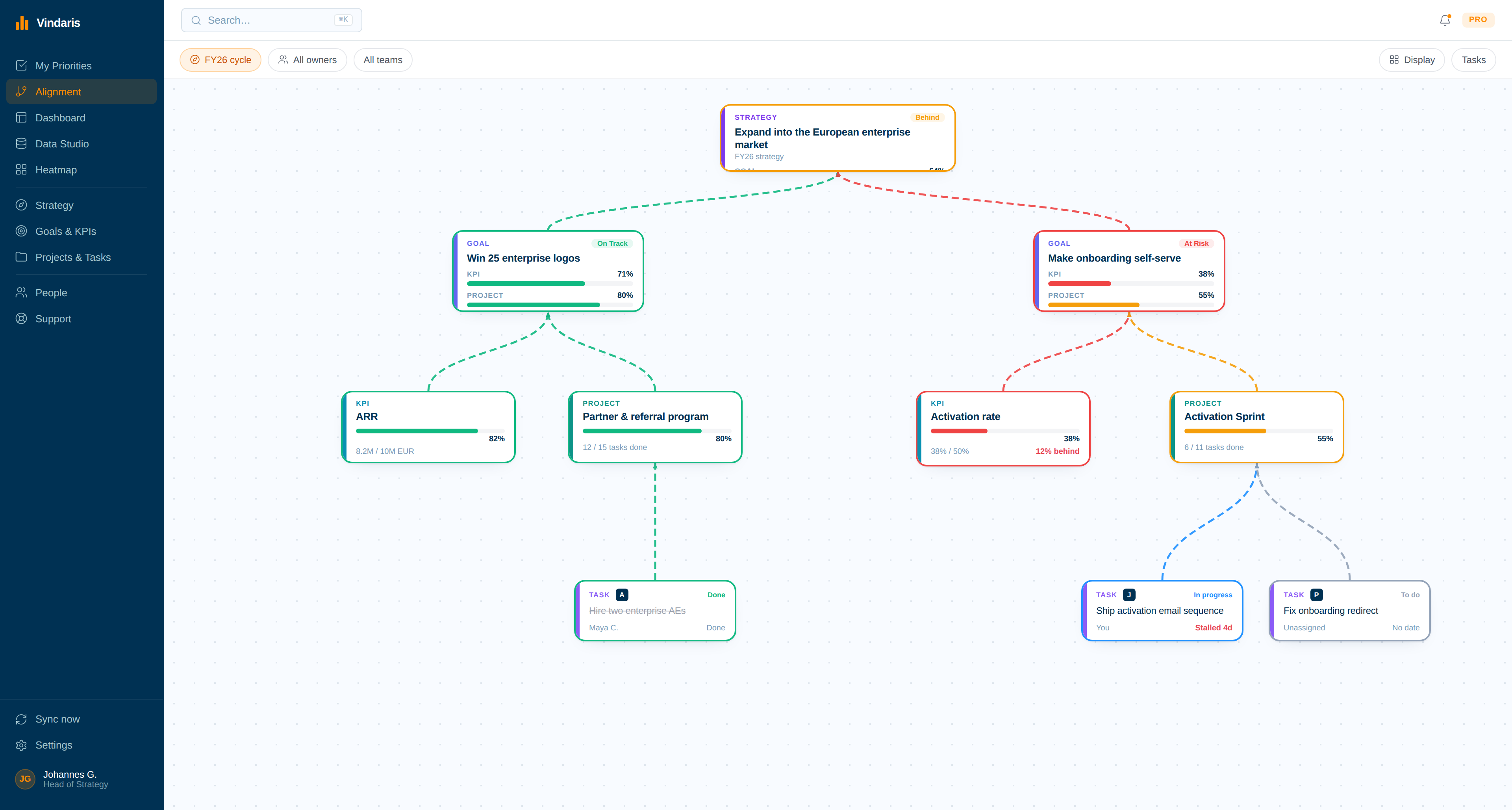
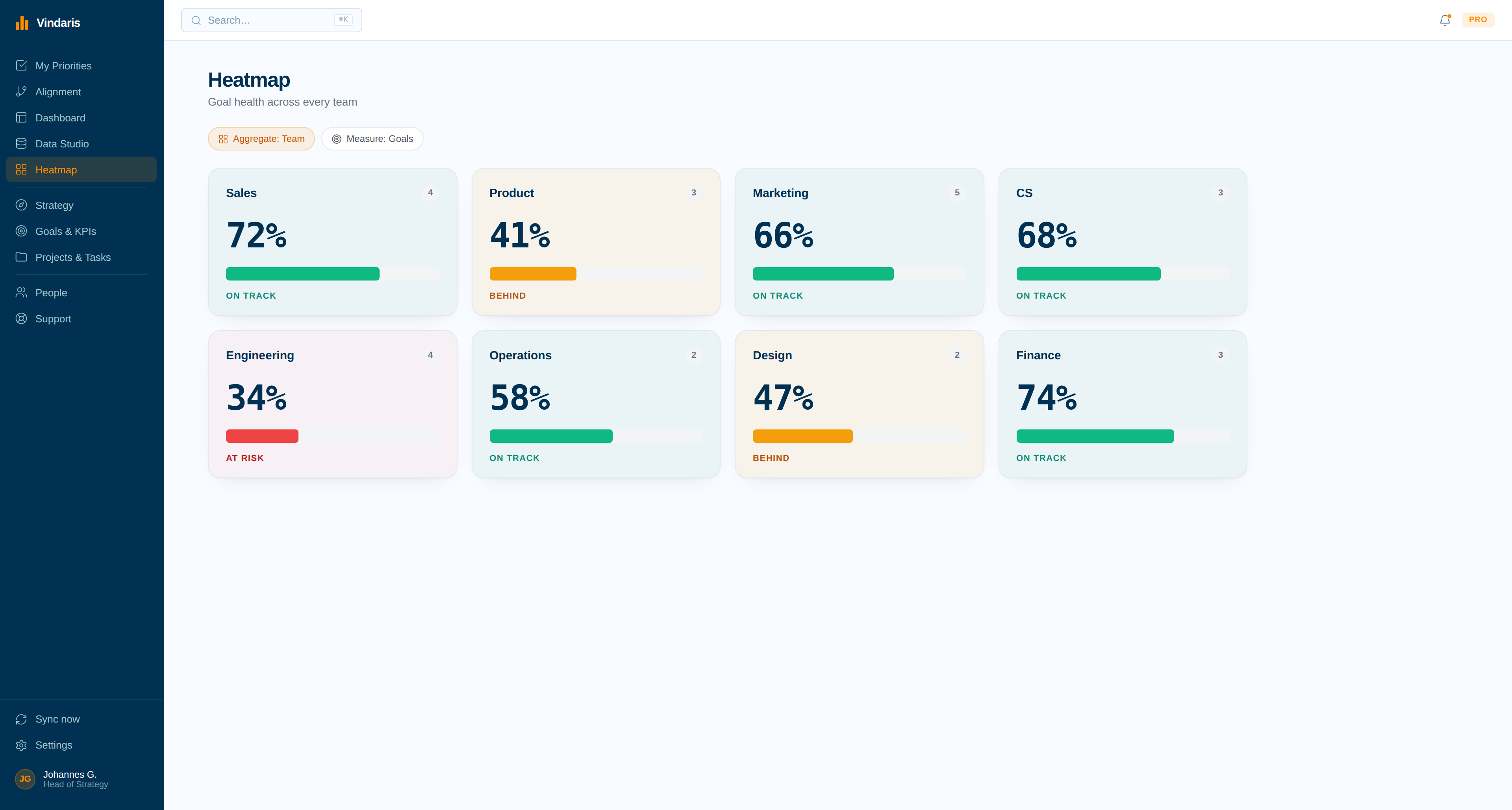
Spot risk while there is still time to fix it.
Run heatmaps across teams, goals, KPIs and projects. Save views and get notified when risk levels change, from task movement rather than a reported number.
Combine tasks and projects across your systems.
Sync HubSpot, MS Planner, Google Tasks, Asana and more into one view. Bidirectional sync keeps everything current while teams stay in their own tools.
All integrations →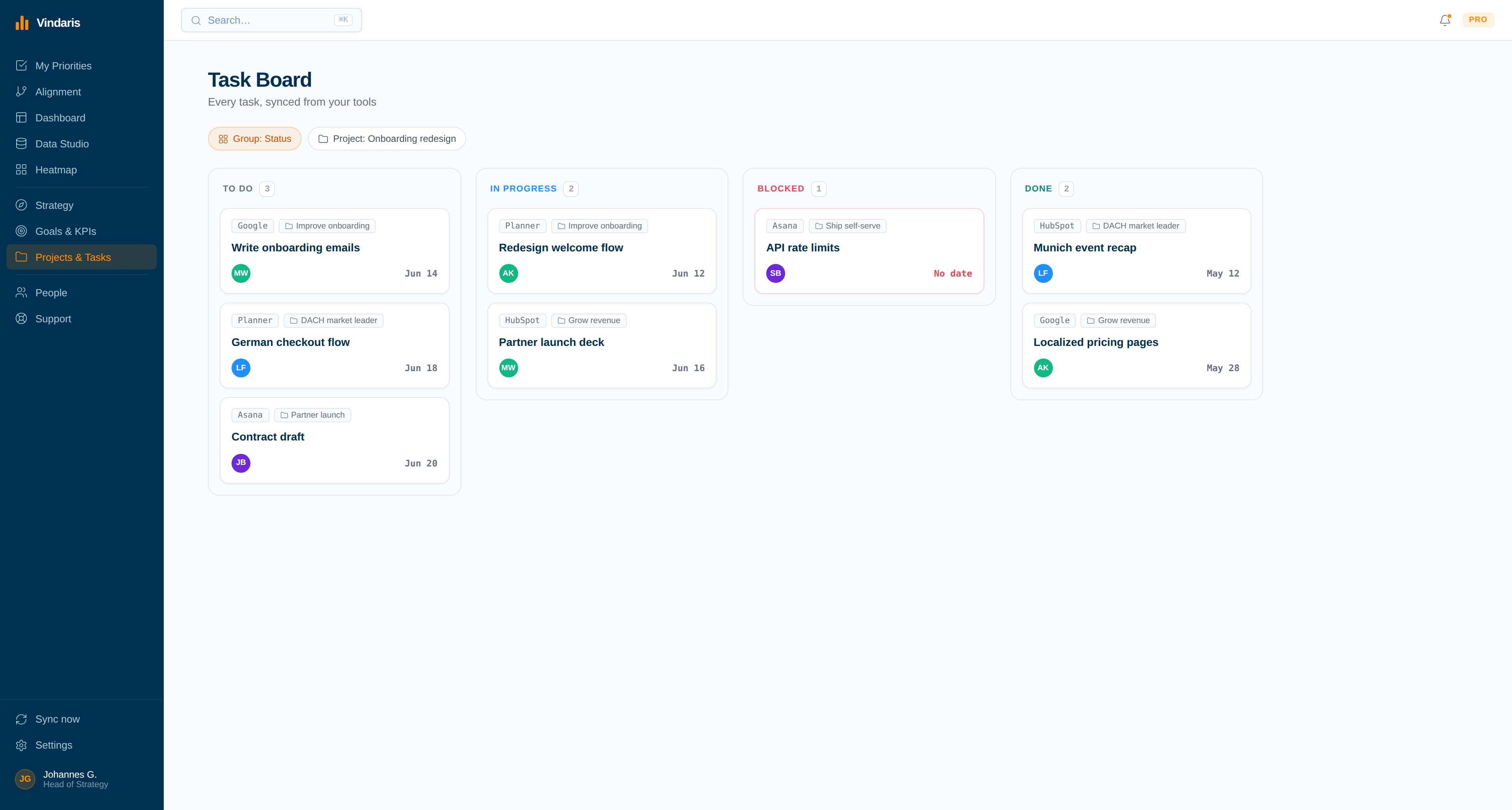
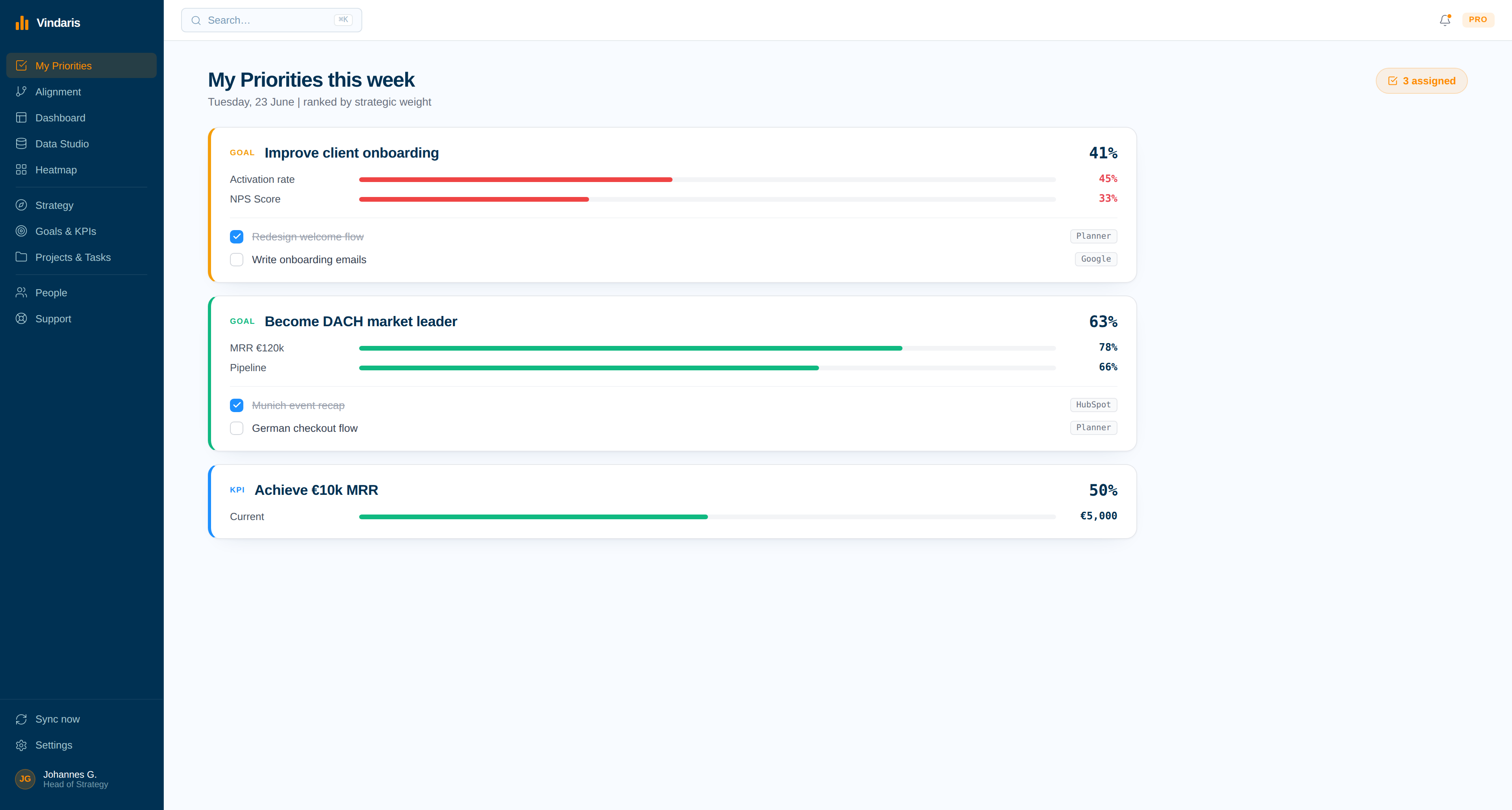
Everyone knows exactly what matters most.
A clear view of each person's goals, KPIs, projects and tasks. Start the week focused on what is due.
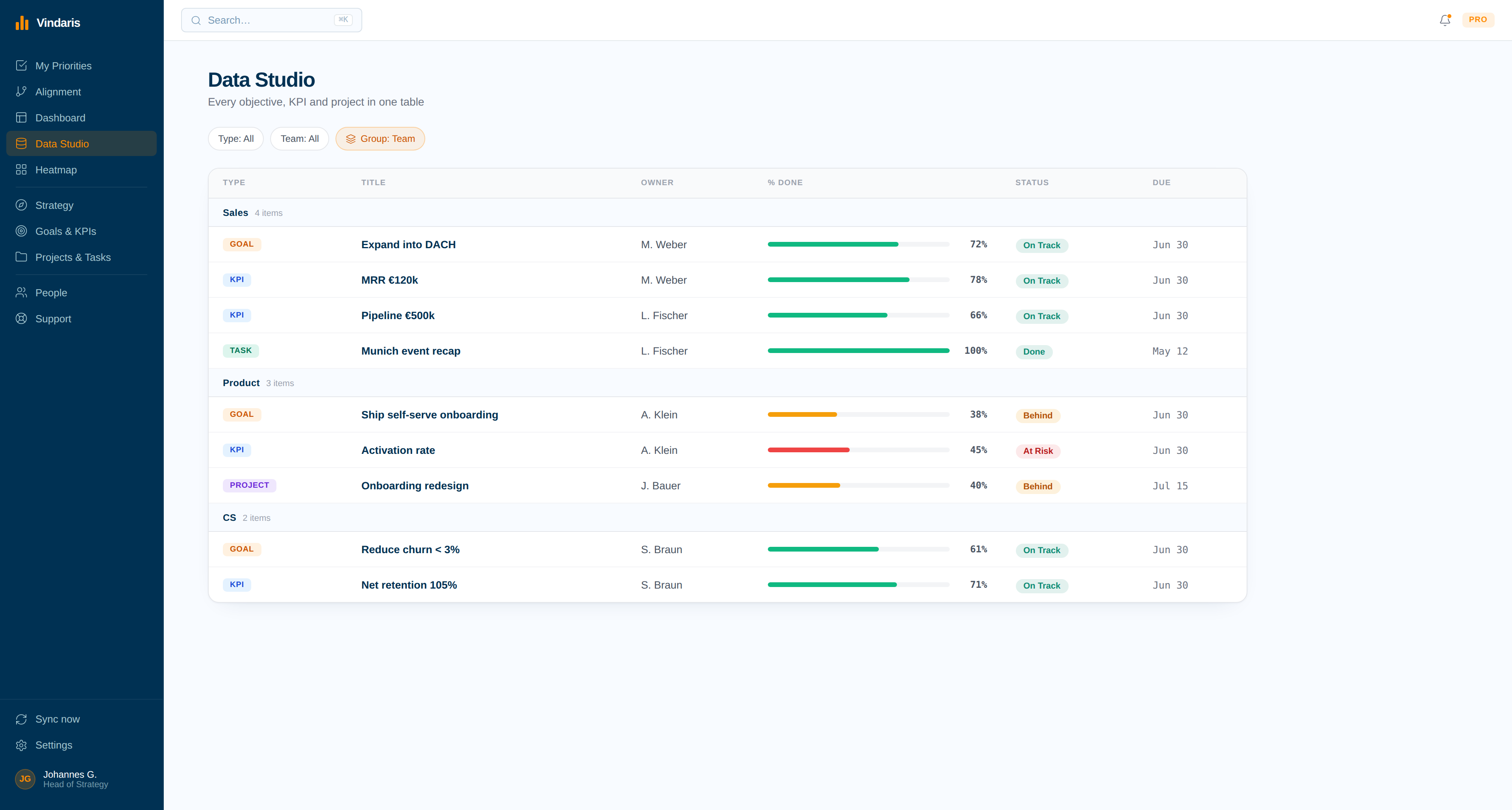
Run reports the way management needs them.
Rank teams, spot risks, compare KPIs to work. AI summaries push updates to Slack, Teams and email.
The migration you already have to do, done once.
Viva Goals is gone, so the question is not whether to move but what to move onto. This is the one moment where changing the architecture costs nothing extra.
Most teams exported to spreadsheet before the December 2025 shutdown. Import that file as-is. Objectives, key results, owners and current values carry over, and nothing needs rewriting even if you want a different framework later.
This is the step Viva Goals never had. Planner tasks and Teams activity sync bidirectionally, so the work your organization was already doing inside Microsoft 365 becomes visible from inside the goals that work is meant to move.
Most organizations that ran Viva Goals also run Jira, Asana, HubSpot or Google somewhere. Connect those too. Viva Goals could not see them at all, which is a large part of why its dashboards were incomplete.
The strongest temptation in this migration is to port the weekly check-in into the new tool, because it is familiar. It was the symptom. With work connected, the update has no information left to add.
Free forever for up to 5 people. No credit card required.
Start free Book a demo No credit card requiredVindaris vs Viva Goals, feature by feature.
Comparing a retired product on features is not very useful, so this compares what each one knows about the work. That is the row Viva Goals lost on, and it is the row most of its replacements also lose on.
| Feature | Vindaris | Viva Goals |
|---|---|---|
| How progress is measured | Read from task-level work and Slack context in the tools your team already uses. | Check-ins entered by goal owners, with basic connectors for some metrics. |
| Goal frameworks supported | Framework-agnostic: OKR, KPI, EOS Rocks, OGSM, SMART, Balanced Scorecard, or hybrid. | OKR-first, with KPI support layered on. |
| Connection to real work | Native work layer with bidirectional sync to HubSpot, Planner, Google, Jira, Asana. | No native work layer. Work stayed in Planner, Teams, Azure DevOps and elsewhere. |
| Risk detection | Automatic execution-risk flags from task movement, focus and pace against plan. | None. Status was whatever the last check-in said. |
| Status reporting | Live views and AI risk summaries pushed to Slack, Teams, and email. | Dashboards inside Microsoft 365 and Teams. |
| Capacity and bandwidth | Built-in bandwidth and capacity planning. | Not covered. |
| Ownership model | Single-owner accountability enforced structurally. | Objective owner, with shared objectives common. |
| Free plan | Free forever, including 2 integrations and up to 5 people. | Retired December 31, 2025. No longer available. |
| Best fit | Teams replacing Viva Goals who do not want the same architecture in a new wrapper. | No longer applicable. The product reached end of life. |
The category as a whole is compared in the best strategy execution software guide, and the argument underneath it is set out in the strategy execution gap whitepaper.
A retired Microsoft SKU, or a published price.
Viva Goals was licensed as part of Viva until it was withdrawn, so the comparison is really between what you were paying inside a bundle and what a dedicated product costs.
| Plan | Viva Goals | Vindaris |
|---|---|---|
| Free tier | No longer available. Retired December 31, 2025. | Free forever. Up to 5 people, 2 integrations, all core features. |
| Entry paid plan | Was licensed within Microsoft Viva, standalone or bundled. | Connect, EUR 10 per user per month. All integrations, unlimited sync. |
| Upper plan | Not applicable. The product reached end of life. | Pro, EUR 20 per user per month. Unlimited users in one organization. |
| Published pricing | Was bundled, so the goals component was rarely priced separately. | Yes, on the website. No quote required to evaluate. |
| Minimum commitment | Annual, through Microsoft licensing. | None. No seat minimum, no annual term, no setup fee. |
Vindaris publishes every tier: free forever for up to 5 people with 2 integrations, EUR 10 per user per month for Connect, EUR 20 for Pro, with data hosted in Europe.
Best for individual contributors, small teams or startups. No credit card required.
- All features (incl. Alignment Canvas, My Priorities, Heatmap, Data Studio & Task Board)
- Set up 2 integrations of your choice
- Invite up to 4 additional members
- 5 ad-hoc AI risk summaries per month
Best for teams, small agencies, or departmental and team management.
- All in Free
- All integrations, unlimited sync
- Unlimited AI risk summaries & alignment suggestions - ad-hoc and scheduled
- Up to 10 users within one organization
Best for multiple teams, exec teams, Chiefs of Staff, departmental leadership or full-org deployments.
- All in Connect
- Unlimited users within one organization
- Direct human support email, 24h response time
- Human-led onboarding support
Common questions, answered
When was Microsoft Viva Goals retired?
What replaces Microsoft Viva Goals?
What is the best Viva Goals alternative?
Why did Viva Goals fail?
Can I migrate from Viva Goals to Vindaris?
Free resources for this topic
A template you can download, a playbook to run, and the thinking behind both. No email required.
Or start with the full picture: strategy execution software that connects your plan to the work delivering it.
Replacing Viva Goals is a choice. Repeating its architecture is optional.
Free forever for up to 5 people. No credit card required.