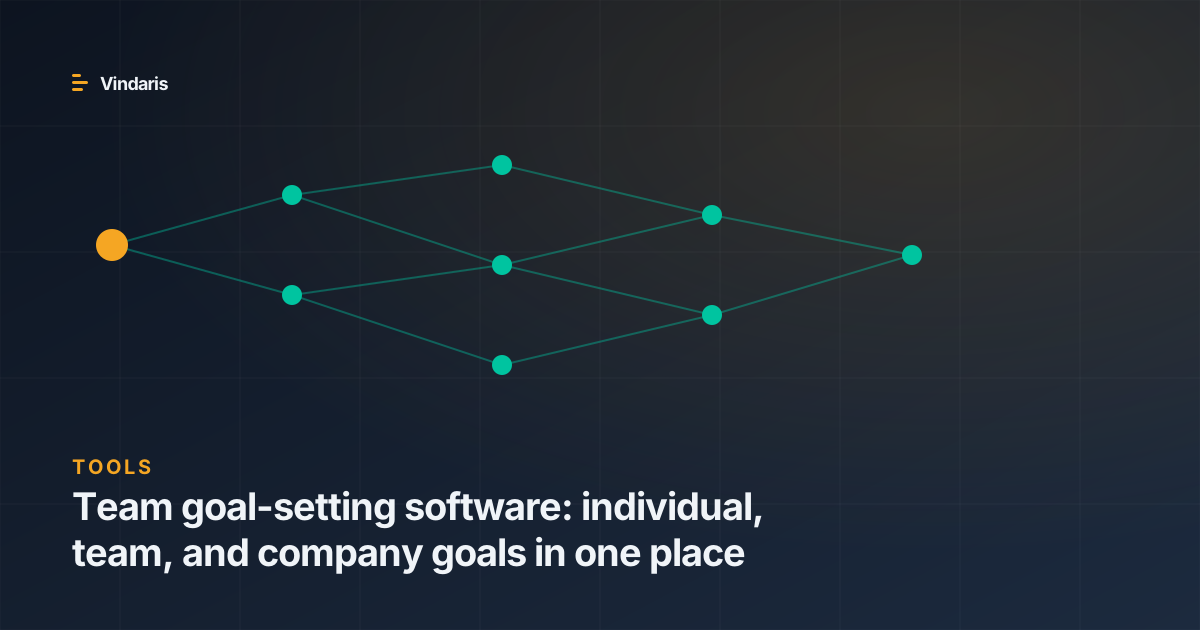
Team goal-setting software has a harder job than individual goal tracking, and the difference is shared goals. A personal goal has one owner who knows the real status. A team goal is owned by several people, often across functions, and the status is whatever emerges from work nobody fully sees on their own. The tool's real test is whether it can hold three layers at once: the individual goals people own, the shared team goals those ladder into, and the company objectives the team is serving. Most tools handle the first layer well and the other two poorly.
The reason matters. A team is not a list of individuals with their own goals stapled together. It is a group with shared outcomes that depend on coordination, and the coordination is exactly what a single-user goal app cannot represent. When a team goal depends on three people in two functions, the question is not whether each person updated their status. It is whether the work actually connects, and a list of individual check-ins will not tell you that.
Why shared goals break most tools
Shared team goals are where the tidy model falls apart. A goal owned by several people, with no single source of truth for its status, tends to become a number everyone assumes someone else is keeping honest. That is how a shared objective drifts into theater: it is marked on track because no individual feels responsible for marking it otherwise, and the gap surfaces only when a milestone is missed. The more people a goal touches, the more this happens.
A team tool has to make shared goals concrete, which means tying the goal to the specific work that delivers it rather than to a status field several people can edit. When the goal is connected to the initiatives and projects beneath it, its status comes from whether that work is moving, and no amount of optimistic check-ins can override the evidence. That is the line between a goal tracker and a strategy execution system, and it is most visible exactly at the team level where goals are shared.
Holding three layers without three tools
The trap teams fall into is one tool for individual goals, another for projects, and a slide deck for the company strategy, with someone reconciling all three by hand every week. Each layer is fine on its own and the seams between them are where work goes missing. The fix is a single model that connects the layers: a person's goal links to a team goal, which links to a company objective, and each links down to the work moving it.
Vindaris is built around that model, so the three layers stay connected without a weekly reconciliation. The same structure means team goals stay tied to company strategy as both change, and the cross-functional dependencies that threaten shared goals have a place to live instead of hiding until they bite.
Choosing a team tool
If your team's goals are mostly self-contained, a lightweight tracker on a clear cadence may be plenty, and the best goal-setting software roundup covers the simple end. If your team's outcomes routinely depend on other teams, a within-team tracker will hide the dependencies that actually decide whether you hit your goals, and you will want a tool that connects beyond the team boundary. The goal management page covers where that line falls, and picking the right goal framework settles the method before the tool.
FAQ
What is the best team goal-setting software? The best fit holds individual, team, and company goals in one connected model and ties shared team goals to the work that delivers them, so status comes from evidence rather than a field several people can edit. Lightweight trackers work for self-contained teams. When team outcomes depend on other teams, a strategy execution tool like Vindaris that connects across boundaries and derives status from work is the stronger choice, because shared goals are where simpler tools fail.
How is team goal-setting different from individual goal-setting? Individual goals have one owner who knows the status. Team goals are shared across people and often functions, so the status emerges from coordinated work no one person fully sees. That makes shared goals the hard part, because they drift toward optimism when no single person owns the honest number. Team software has to tie shared goals to real work, not to a status field anyone can edit.
Why do shared team goals tend to fail? Because responsibility for the status diffuses. When several people own a goal, each can assume someone else is keeping its status honest, and the goal stays green until a missed milestone exposes the gap. The fix is connecting the goal to the specific work delivering it, so its status is derived from whether that work is moving rather than from a check-in nobody feels accountable for.