Process Mining
Process mining reconstructs how a business process actually runs by reading the event logs enterprise systems already record, then comparing that observed process to the designed one. It surfaces the deviations, loops and bottlenecks that process maps hide. Task mining is the related technique that captures desktop activity instead of system logs.
The method needs three fields that most enterprise systems log anyway: a case ID, an activity name and a timestamp. From those, mining software reconstructs the real process model, every variant included, and checks it against the designed process. The category grew up around tools like Celonis in operations domains such as order-to-cash and procurement, where the mined reality routinely embarrasses the official process map.
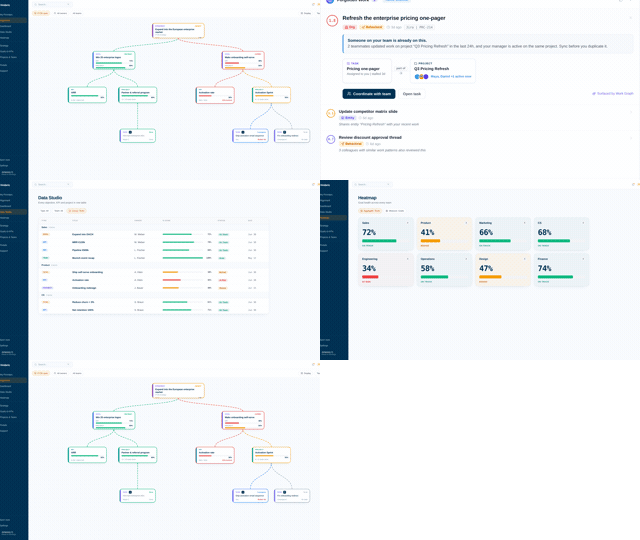
The idea generalizes beyond operations: read actual behavior, compare it to intent. Applied to the strategy layer, the event log is the stream of task activity, reassignments and conversations across work tools, and the designed process is the strategy itself. Mining that gap shows where effort has quietly drifted away from goals, which is the same discipline process mining applies to invoices, pointed at execution instead.
An order-to-cash team believes invoices go out in three steps. The mined process shows eleven variants and a rework loop through credit checks. The map was the intention; the log was the truth. Strategy execution has the same split between where the plan says effort goes and where it actually goes.
See where effort has drifted from your goals
Vindaris runs OKRs, KPIs, EOS, OGSM, SMART goals, the Balanced Scorecard, and Hoshin Kanri in one place, with the Work Graph flagging execution risks across all of them. Start free, no credit card.
Sign Up for Free