Bottleneck Analysis
Bottleneck analysis is the practice of finding the constraint that limits a system's throughput, then relieving it before optimizing anything else. Born in lean manufacturing, it applies equally to knowledge work, where the bottleneck is usually a person, a handoff or a decision rather than a machine.
In a factory the bottleneck is visible: inventory piles up in front of the slowest station. In knowledge work the same dynamics hide inside tools and calendars. Work queues in front of the one person who can approve it, stalls in the handoff between two teams, or waits on a decision nobody owns. Because the queue is invisible, effort gets spent speeding up steps that were never the constraint, and throughput does not move.
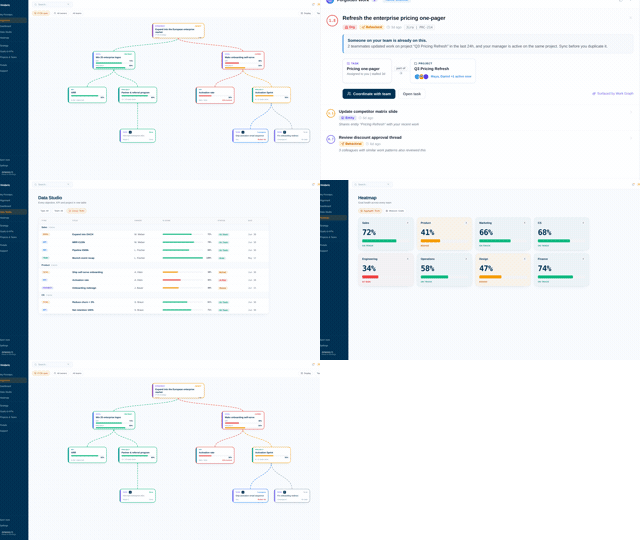
A useful analysis for team-based work follows the lean logic with different instruments: trace where items actually wait, not where people feel busy. The recurring knowledge-work bottlenecks are concentrated expertise (every critical path runs through one person), cross-team handoffs (each hop adds a queue), and unowned decisions (work pauses while nobody decides). Task-level data across tools makes these measurable: wait time between status changes, items blocked per person, and goals whose work sits idle while capacity exists elsewhere.
A team doubles engineering capacity to ship faster and throughput barely moves. Tracing wait times shows every release queues an average of six days for one architect's review. The constraint was never build capacity; relieving the review bottleneck does what the hiring could not.
See where effort has drifted from your goals
Vindaris runs OKRs, KPIs, EOS, OGSM, SMART goals, the Balanced Scorecard, and Hoshin Kanri in one place, with the Work Graph flagging execution risks across all of them. Start free, no credit card.
Sign Up for Free