Strategic Foresight
Strategic foresight is a structured practice of exploring plausible futures, through methods like scenario planning, horizon scanning and trend analysis, so an organization prepares for change instead of reacting to it. It works with multiple possible futures rather than a single prediction.
Foresight methods share one mechanism: find weak signals of change early, develop them into scenarios, and test today's strategy against each one. Classic practice scans outward, at markets, technology, regulation and competitors, and produces scenarios for the leadership offsite. Its known failure mode is the last mile: scenarios that never touch the plan, so the organization that "explored" a future is no better prepared when it arrives.
The overlooked half of foresight is internal. An organization's own execution data carries early signals in the same sense: a strategic goal losing effort month over month, a dependency that keeps slipping, a team whose work has drifted from the priority it was assigned. Reading those signals turns foresight from an annual exercise into an operating habit, and gives external scenarios something concrete to act on, because the current allocation of effort is known rather than assumed.
A scenario exercise flags a plausible future where a key partner channel collapses. Instead of filing the deck, the team checks current work: 70% of pipeline effort assumes that channel. The scenario changes next quarter's allocation, which is foresight completing its last mile.
See where effort has drifted from your goals
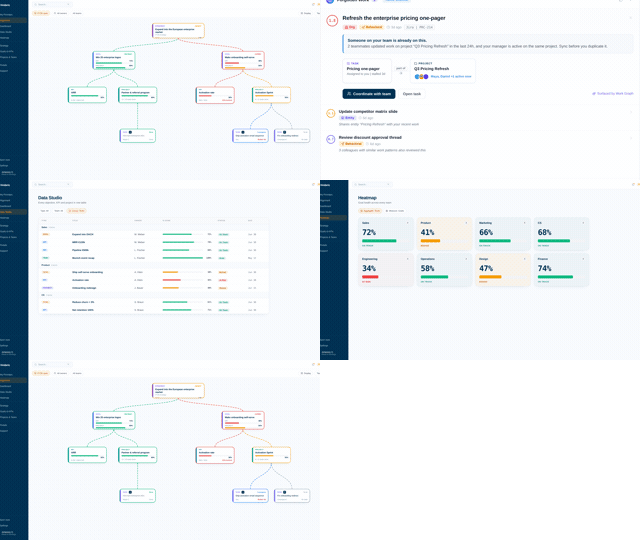
Vindaris runs OKRs, KPIs, EOS, OGSM, SMART goals, the Balanced Scorecard, and Hoshin Kanri in one place, with the Work Graph flagging execution risks across all of them. Start free, no credit card.
Sign Up for Free