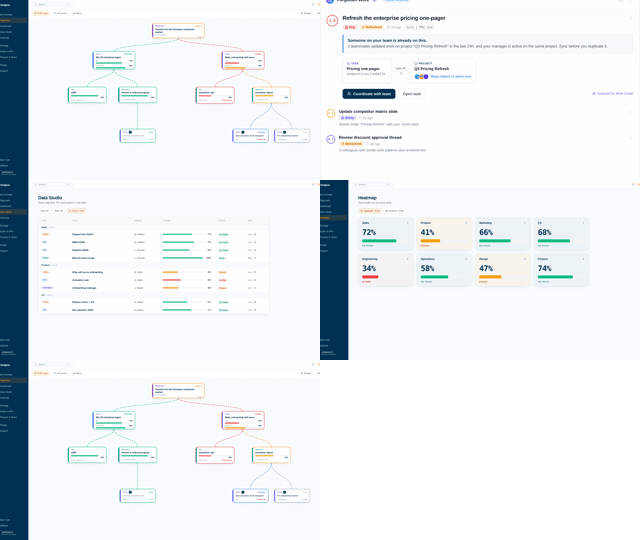
Cascading Goals
Cascading goals is the practice of translating high-level company objectives into supporting goals for departments, teams, and individuals, so every level's work rolls up to the strategy. Done well it creates a clear line of sight from a person's task to the company's direction. Done mechanically it produces a brittle tree nobody updates.
There are two ways to cascade. Strict cascading copies a parent goal down level by level, which guarantees alignment but is rigid and slow to change. Aligned cascading lets each level write its own goals that explicitly link to a parent, which is more flexible and is closer to how OKRs are meant to work.
The failure mode is the same in both: the cascade is built once, at planning time, and then frozen. When priorities shift mid-cycle, the tree no longer reflects reality, and the line of sight everyone admired on the slide quietly breaks.
Company: enter the DACH market. Sales: sign 20 DACH logos. Marketing: build a German demand engine. Product: ship German localization and EU data residency.
See where effort has drifted from your goals
Vindaris runs OKRs, KPIs, EOS, OGSM, SMART goals, the Balanced Scorecard, and Hoshin Kanri in one place, with the Work Graph flagging execution risks across all of them. Start free, no credit card.
Sign Up for Free