OKR
OKR (Objectives and Key Results) is a goal-setting framework that pairs a single qualitative Objective, the outcome you want, with three to five measurable Key Results that prove you reached it. Popularized at Intel and Google, it is set on a quarterly or annual cycle and scored at the end.
An Objective answers "where do we want to go?" and is deliberately memorable and qualitative. Each Key Result answers "how do we know we got there?" and must be a number, so progress is not a matter of opinion. A common rule of thumb is three to five Key Results per Objective, scored 0.0 to 1.0 at the close of the cycle.
OKRs are an alignment tool, not a task list. The Key Results describe outcomes, while the projects and tasks that deliver them sit one level below. The framework breaks down in practice when those Key Results drift away from the work actually being done, so progress gets typed into a status field instead of derived from delivery.
Objective: Become the default choice for mid-market buyers. Key Results: lift win rate from 22% to 35%, grow qualified pipeline from EUR 4M to EUR 7M, cut sales cycle from 64 to 45 days.
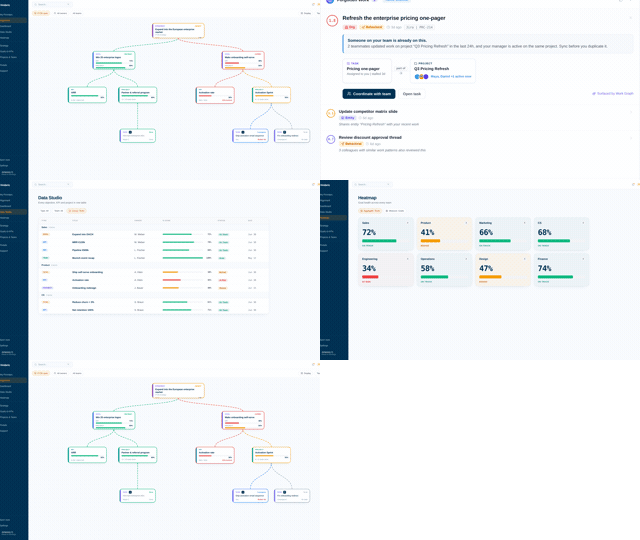
See where effort has drifted from your goals
Vindaris runs OKRs, KPIs, EOS, OGSM, SMART goals, the Balanced Scorecard, and Hoshin Kanri in one place, with the Work Graph flagging execution risks across all of them. Start free, no credit card.
Sign Up for Free