Strategic Alignment
Strategic alignment is the state where an organization's structure, resources and day-to-day work all point at the same strategic goals. It is a property of the work itself, measurable by tracing each goal to the effort behind it, rather than an outcome of communication alone.
Most definitions treat strategic alignment as a communication problem: explain the strategy well enough and the organization will follow. In practice alignment decays between the moments it is declared. Priorities shift, projects outlive their reason, and two teams quietly optimize for goals that no longer fit together. The all-hands where the strategy was presented has no mechanism for noticing any of this.
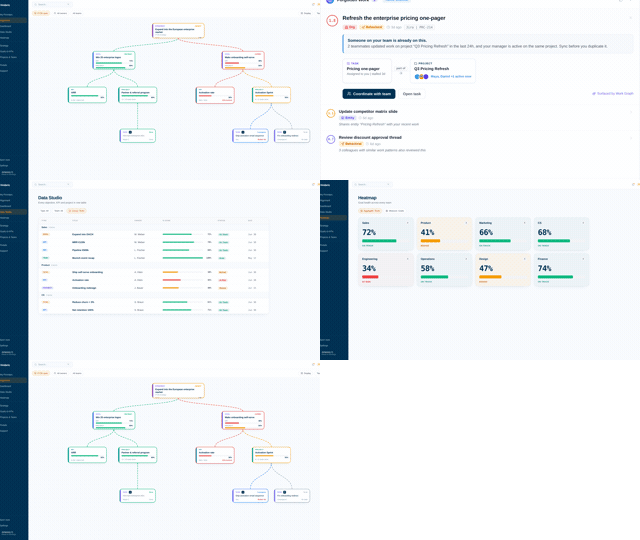
Treated as a system property, alignment becomes checkable. When strategy, goals and KPIs are mapped to the projects and tasks beneath them, the question "are we aligned?" has an empirical answer: every goal either has active, pacing work behind it or it does not, and every team's effort either traces to a strategic priority or it does not. Misalignment then shows up as a flagged gap on a specific goal, weeks before it would surface in a review.
A company declares expansion into mid-market as its top priority. A trace of active work shows the platform team's quarter is fully booked with enterprise custom requests. The strategy says one thing, the allocation says another, and the gap is strategic misalignment in measurable form.
See where effort has drifted from your goals
Vindaris runs OKRs, KPIs, EOS, OGSM, SMART goals, the Balanced Scorecard, and Hoshin Kanri in one place, with the Work Graph flagging execution risks across all of them. Start free, no credit card.
Sign Up for Free