Strategic Initiative
A strategic initiative is a significant, usually cross-functional body of work an organization funds to close the gap between where it is and where its strategy says it should be. Initiatives sit between goals and tasks: a goal states the outcome, the initiative is the bet you make to reach it, and tasks are how the initiative gets delivered.
Initiatives are where strategy becomes expensive. They consume headcount and budget, span multiple teams, and carry dependencies that decide whether they land. Each should have a single accountable owner, a goal it serves, and a clear scope, or it becomes the project that belongs to no one.
Strategic initiative vs project vs goal
The three terms get blurred, and the blur is costly. A goal is the outcome you want, such as reaching 4% checkout conversion. A strategic initiative is the funded bet you make to get there, such as replatforming the checkout flow. A project or task is a unit of the work that delivers it. Goals answer why, initiatives answer what you are betting on, and projects answer how. An initiative differs from routine project work in two ways that matter: it is tied to a specific strategic goal, and it has a defined end rather than running indefinitely as business as usual. It also tends to cross team boundaries, which is what makes its dependencies so decisive.
What makes an initiative strategic
Not every project qualifies. A strategic initiative changes the trajectory of the business rather than keeping the lights on. It is funded deliberately, it competes with other initiatives for scarce capacity, and cancelling it would materially change whether a strategic goal is met. If a body of work could be stopped without anyone revisiting the strategy, it is operational work rather than a strategic initiative.
The initiative lifecycle
A well-run initiative moves through a predictable arc. It is proposed against a specific goal and gap. It is scoped and funded, with an owner named and dependencies mapped. It is delivered through connected project work, where progress is read from the tasks rather than typed into a status field. And it is reviewed and closed, either because it reached its goal or because the goal moved and the initiative no longer earns its cost. Skipping that last step is how a portfolio fills with initiatives nobody remembers funding.
Why strategic initiatives fail
Initiatives rarely fail for lack of effort. They fail because ownership is shared across a committee that moves at the speed of its next meeting, or because a cross-functional dependency stayed invisible until a demo exposed it. The most common failure is drift: the initiative that has outlived its reason but keeps consuming people because no one reviews it against the goal it was funded to serve.
Managing a portfolio of initiatives
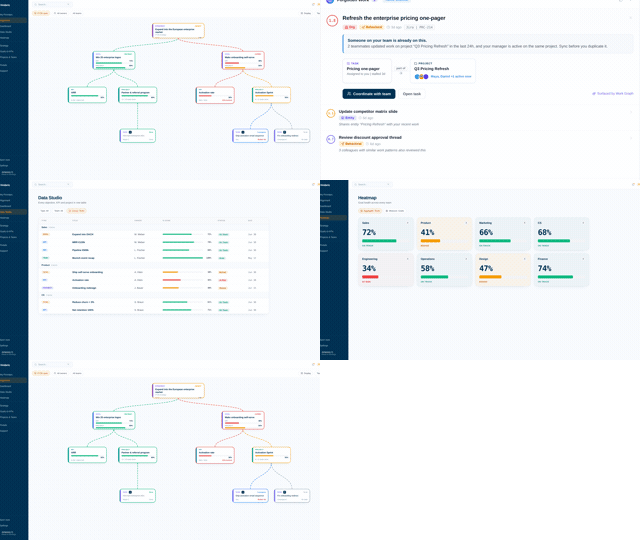
Managing initiatives at scale means keeping the whole chain visible, from the goal above each initiative to the work below it. Give every initiative one accountable owner. Make dependencies explicit before they become blockers. Review the portfolio against real work instead of status slides, so risk surfaces from stalled tasks while there is still time to act. This is the core of strategic initiative management software and the wider discipline of strategy execution: a strategy is only as real as the initiatives and work connected to it.
Initiative: replatform the checkout flow. Serves the goal of lifting conversion to 4%. Owner: Director of Growth. Spans engineering, design, and payments.
See where effort has drifted from your goals
Vindaris runs OKRs, KPIs, EOS, OGSM, SMART goals, the Balanced Scorecard, and Hoshin Kanri in one place, with the Work Graph flagging execution risks across all of them. Start free, no credit card.
Sign Up for Free