How to Close the Strategy Execution Gap
Surveys have said the same thing for decades: a large majority of strategies fail, and they fail in execution rather than in formulation. The strategy is usually fine. What breaks is the chain between a plan on a slide and the daily work of the people meant to deliver it. The gap is not a single problem but a handful of predictable breaks in that chain. This playbook names each break and the move that closes it, so the strategy you wrote is the one that actually runs.
The steps
Much of the gap opens at the source, with a strategy too vague to do anything with. "Become the market leader" is a direction, not a plan; nobody can wake up and execute it. Translate each strategic intent into a small number of measurable objectives, so a team can look at it and know what to do this quarter. Ambiguity at the top multiplies into paralysis below.
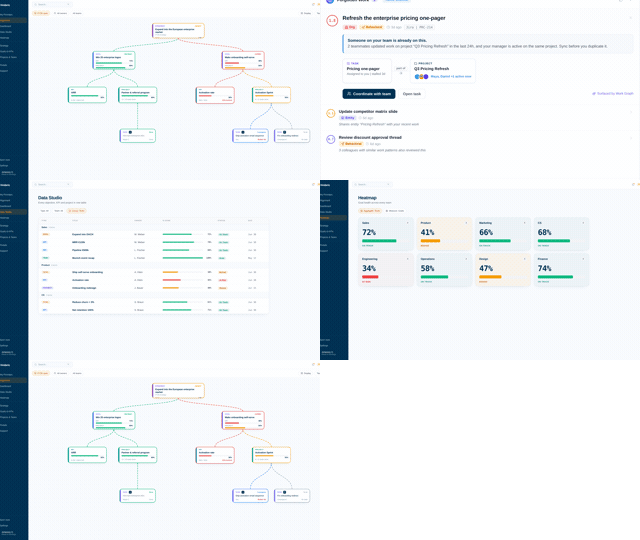
The widest part of the gap is usually between goals and work. The objectives live in one system and the actual tasks in another, so no one can see whether a goal has anything moving it. Link each goal to the initiatives and tasks beneath it. A goal with no traceable work is the gap made visible, and finding it early is the whole point.
A strategy understood only in the boardroom cannot be executed on the floor. Cascade it so each team can state, in its own words, how its goals serve the company's. The break here is silent: leadership assumes the strategy is understood while teams quietly optimize for whatever was measured last year. Line of sight is what closes it.
A strategy set once and revisited at year end has no mechanism to stay on course. Build the weekly, monthly, and quarterly rhythm that checks progress and forces correction. Without a cadence, the gap grows in silence, because nothing in the calendar ever asks whether the plan is still on track until it is too late to matter.
When status lives in a deck only leadership sees, the people doing the work cannot tell whether they are winning. Put progress on the goals and the work where the whole organization can see it. Visibility does two things: it lets teams self-correct without waiting for a review, and it makes a stalled goal hard to hide until the quarter is lost.
All the visibility in the world is wasted if nothing happens when a goal turns red. The final break is inaction: a stall is flagged and the organization absorbs it instead of responding. Visibly acting on the first honest red, reallocating, unblocking, or changing the approach, is what teaches everyone that the signals are real and the plan is something leadership actually steers. That warning sign has a name: execution risk, the gap between a goal and the effort, resources and focus actually pointed at it. Watch for it at task level - a KPI whose supporting work has stalled, a team whose tasks point somewhere else - and the first sign arrives weeks before the review would have caught it.
Frequently asked questions
What is the strategy execution gap?
It is the gap between the strategy an organization sets and what it actually delivers. The plan is sound on paper, but the chain from goals to daily work breaks somewhere, so results fall short of intent. It is consistently cited as the reason most strategies fail.
Why do most strategies fail in execution?
Rarely for a single reason. A handful of breaks compound: strategy too vague to act on, goals disconnected from the work, teams without line of sight, no cadence to catch drift, and no response when something stalls. Each widens the gap, and they tend to occur together.
How do you measure the execution gap?
Compare what you committed to at the start of a cycle against what you delivered, and look at how late the misses surfaced. A large gap that only became visible at quarter end points to missing visibility and cadence, not just ambitious goals.
Run this playbook on goals connected to real work
Vindaris connects every goal to the traceable work moving it, so the cadence in this playbook runs on real progress instead of hand-typed status. Start free, no credit card.
Sign Up for Free