Strategy on a Page
Strategy fails most often not because it is wrong but because no one can recite it. This one-pager is the antidote, and it is deliberately framework-neutral: use it above OKRs, EOS, OGSM, or anything else. The section that does the most work is the last one, the explicit not-doing list. A strategy that never says what you are giving up is a wish list, and it is the part most plans quietly omit.
Free and ungated. Opens in PowerPoint, Google Slides, or Keynote. No signup, no email wall.
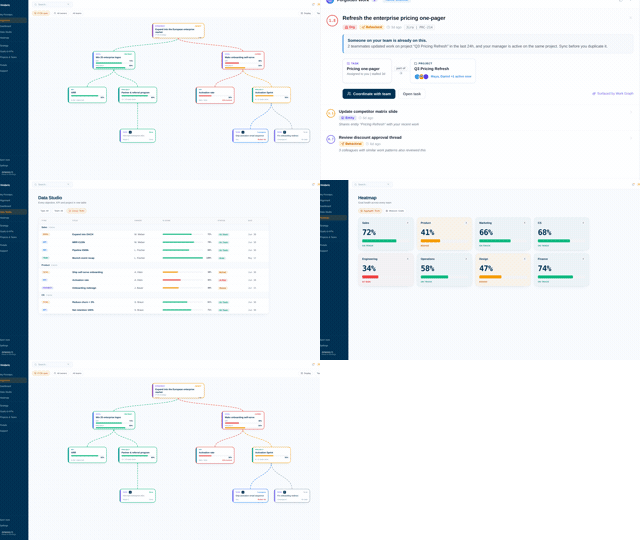
A spreadsheet shows the plan on the day you fill it in. To see which goals have no project or task behind them a month later, open the Vindaris demo. No signup needed.
How to use this template
- Write the ambition so anyone in the company could repeat it. If it needs the deck to make sense, it is not yet on a page.
- Limit how-we-win to a few real choices. If a competitor could claim the same line, it is a platitude, not a strategy.
- Give each yearly priority an owner. A priority with no owner is a hope shared by the whole company and held by no one.
- Fill the not-doing list honestly. The trade-offs you name are what make the rest of the page believable.
Frequently asked questions
Does strategy on a page replace OKRs or EOS?
No, it sits above them. The one-pager states the direction and the choices; OKRs, EOS Rocks, or OGSM are how you operationalize and track it through the year.
Why include a not-doing list?
Because strategy is choice, and a plan that only adds priorities without naming trade-offs overloads teams and quietly fails. The not-doing list is what makes the focus real.
What is a one-page strategic plan?
The same artifact under another name: the whole strategy compressed to a single page covering direction, choices, priorities, and measures. The compression is the value, because a strategy nobody can hold in their head is a strategy nobody follows.
Run this template live, connected to real work
A template is a starting point. In Vindaris, the same structure becomes a living plan where every goal links to the work moving it, so progress updates without a manual check-in. Start free.
Sign Up for Free