AI Context Layer
An AI context layer is the system that gives AI models and agents current, structured knowledge about a company: its goals, its projects, who owns them and what happened this week. It sits between the tools where people work and the AI that acts, so every agent starts from the same account of the business.
Companies first gave their AI context through instruction files and document search. An instruction file such as AGENTS.md describes the company on the day its author wrote it. Search returns whichever documents resemble the question, including outdated ones, and it returns a different set when the wording changes. A context layer replaces both for anything that moves. It holds objects such as goals and projects with their owners, their links and their current state, and it updates as activity arrives from connected tools.
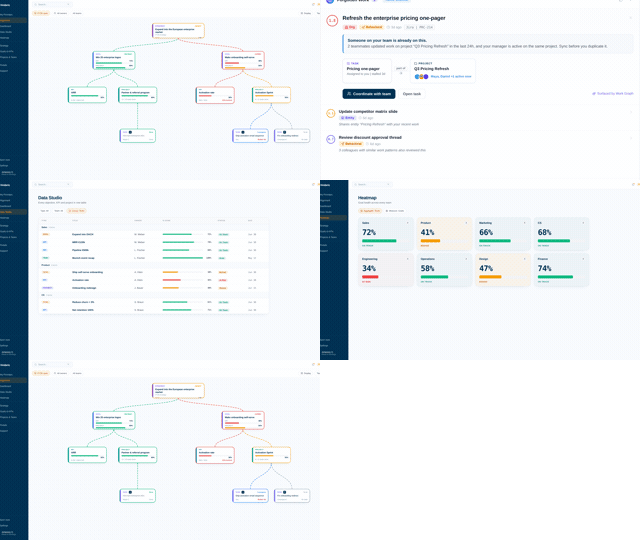
Most context layers described so far concern data: metric definitions and table lineage for analytics agents. A context layer for strategy execution holds the plan and the state of the plan. It answers which goals leadership committed to, which projects serve them and which of those are blocked. Vindaris builds this layer with its Work Graph, which analyzes work activity across tools such as Jira, Slack, Microsoft 365 and meeting transcripts, and AI agents query it over MCP. The longer article is What Is an AI Context Layer?
A team lead asks an agent whether the Q4 launch is on track. Without a context layer, the agent searches the document store and quotes the latest status report, which says yes. With one, it answers from this week's tickets and threads: one project under the launch goal has been blocked for nine days, and it names the thread in which an engineer said so.
See where effort has drifted from your goals
Vindaris runs OKRs, KPIs, EOS, OGSM, SMART goals, the Balanced Scorecard, and Hoshin Kanri in one place, with the Work Graph flagging execution risks across all of them. Start free, no credit card.
Sign Up for Free