Strategy Execution Framework
A strategy execution framework is a named method for translating strategy into goals, metrics, owners and a review rhythm. OKR, EOS, OGSM, Hoshin Kanri and the Balanced Scorecard are the common choices, and they differ in vocabulary and cadence more than in intent.
Every framework supplies the same core parts under different names: a goal structure that breaks strategy into commitments, a measurement rule that defines what counts as progress, and a cadence of reviews where the numbers are confronted. OKR pairs qualitative Objectives with measurable Key Results on a quarterly cycle. EOS runs 90-day Rocks against a weekly scorecard. OGSM compresses strategy onto one page. Hoshin Kanri cascades a few breakthrough objectives through catchball. The Balanced Scorecard spreads measures across four perspectives.
What no framework supplies is the connection to the work. A framework structures how strategy is declared and reviewed; whether progress is derived from real delivery or typed into a status field is decided by the systems underneath it. That is why switching frameworks rarely fixes an execution problem. The grammar changes while the gap between the goals and the work stays exactly where it was.
The same company goal expressed three ways: as an OKR it is an Objective with measurable Key Results, in EOS it is a Rock with a scorecard number, in Hoshin Kanri it is a breakthrough objective agreed through catchball. The framework changes the grammar. The work beneath it stays the same.
See where effort has drifted from your goals
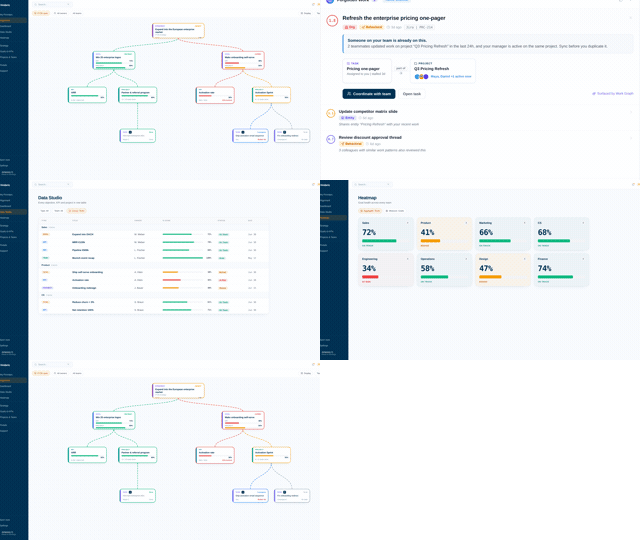
Vindaris runs OKRs, KPIs, EOS, OGSM, SMART goals, the Balanced Scorecard, and Hoshin Kanri in one place, with the Work Graph flagging execution risks across all of them. Start free, no credit card.
Sign Up for Free